Showing posts with label Pregnancy. Show all posts

Monday, November 17, 2008

Pregnancy pounds predict kids' weight as teens


Women who gain too much weight during pregnancy may not only have bigger babies, but bigger teenagers as well, a study suggests.

Researchers at Harvard Medical School found that among nearly 12,000 children and teenagers they studied, those whose mothers gained more than the recommended amount of weight during pregnancy were 42 percent more likely to be obese.

The risk was independent of other factors the researchers examined, including mothers' pre-pregnancy weight, family income and parents' education.

Some past studies have linked excessive weight gain during pregnancy to a higher risk of obesity in childhood. These latest findings add to evidence that the fetal environment may have a "sustained effect" on children's weight regulation, Dr. Emily Oken and colleagues report in the journal Obstetrics & Gynecology.

For women, they say, the study underscores the importance of going into pregnancy at a healthy weight, and then gaining only the recommended amount.

In the U.S., the Institute of Medicine (IOM) suggests that normal-weight women gain 25 to 35 pounds during pregnancy. Women who were overweight before becoming pregnant are encouraged to gain a little less -- 15 to 25 pounds -- while underweight women should put on 28 to 40 pounds.

The current study included 11,994 children between 9 and 14-years olds whose mothers were part of the Nurses Health Study II, a long-range health study of female nurses from across the U.S. The researchers found that 6.5 percent of the children were obese.

Oken's team found that when mothers exceeded the IOM guidelines for pregnancy weight gain, their children's weight also tended to climb.

Compared with their peers whose mothers followed the IOM guidelines, those whose mothers gained too much weight were 42 percent more likely to be obese by the time they were 9-to-14 years old.

Researchers suspect that excess pregnancy pounds may affect fetal development in a way that makes children more susceptible to excessive weight gain.

Animal research has found that overeating during pregnancy alters the expression of genes involved in fat regulation in offspring, and seems to affect the appetite-control centers of their brains as well.

SOURCE: Obstetrics & Gynecology, November 2008.

Sunday, June 29, 2008

Power Foods for Pregnant and Nursing Women


These foods are great for pregnant and lactating women, along with their families. When it's important to make every bite count, depend on these nutritional powerhouses. In case any of these don't suit your taste buds or your dietary choices, we've included alternative sources of key nutrients as well.

Yogurt

Why? Calcium needs increase during pregnancy and yogurt is an excellent calcium source. The need for calcium increases to approximately 1300 milligrams a day during pregnancy. If you are not obtaining this quantity from your diet or vitamin supplement, your body will meet your baby's calcium needs by pulling from your own supply, which makes calcium-rich foods like yogurt, dark leafy greens, sardines with bones, and calcium-fortified orange juice important at this time.

Did you know? In addition to calcium, yogurt is a beneficial fermented food that provides probiotic bacteria, which promotes intestinal and immune health for baby and mom. Probiotic bacteria are cultures of beneficial bacteria found in healthy gut microflora. Yogurt, probiotics and fermented foods help us to keep our intestinal ecosystems healthy.

How? There are many varieties of yogurt and fermented dairy. Yogurt can be eaten as a convenient snack or meal, as an ingredient in smoothies or dips, or as a healthy dessert. If presweetened yogurt is too sweet, mix together half plain and half sweetened, or sweeten plain yogurt with berries and a little sweetener of choice. Probiotic supplements are also available.


Dark Leafy Greens

Why? Dark leafy greens, such as kale and collards, are nutrient powerhouses, containing calcium, fiber, and vitamins A and C, and also rate high on the antioxidant scale. Dark leafy greens are also an important source of folic acid. The U.S. Food and Drug Administration (FDA) recommends that all women in their childbearing years consume 400 micrograms (or 0.4 mg) of folic acid every day to help prevent neural tube defects in their children. Other foods high in folic acid include oranges, beans, asparagus, avocado, and berries. Many vitamin supplements contain folic acid as well.

Did you know? Dark leafy greens are an easy-to-absorb source of non-dairy calcium. This is because they contain the optimal phosphorus to calcium ratio to enhance calcium absorption. Important exceptions to note are spinach and Swiss chard, which contain compounds called oxalates that interfere with calcium absorption. Although spinach and Swiss chard are nourishing foods, do not think of them as a significant source of minerals.

How? Eat with a little fat for better absorption of nutrients. Add a little vinegar for optimum availability of minerals. Dark leafy greens are easily added to other dishes including soup, meatloaf or quiche, adding nutrients without excessive flavor.

Other Non-Dairy Sources of Calcium: Fortified orange juice, sesame seeds, almonds, dried fruit, corn tortillas, tofu, sardines with bones, legumes, fortified foods and supplements.


Eggs

Why? When it comes to value and high quality nutrition, eggs are a good choice since they contain important nutrients for pregnant women, including vitamin A, iron, and protein. Protein needs increase by 10 grams daily for pregnant women, and an adequate protein intake often helps to temper sugar cravings. Note that most of the nutrition in eggs is found in the yolk.

Did you know? For extra nutrition, look for DHA-enriched eggs. DHA is an omega-3 fatty acid important for brain development. The chickens that produce these eggs have been given a special fed containing marine algae, which increases DHA levels in the egg.

How? The simplest way to prepare eggs is hard-boiled. Other easy dishes include omelets and quiches.


Fatty Fish

Why? Fatty fish, such as salmon, sardines, black cod, anchovies, herring and trout, provide omega-3 fatty acids, which are the primary components of brain tissue and are vital for brain and visual development. Studies have shown women who eat fish during pregnancy have children with better visual acuity, higher IQ, better in language and communication skills, and decreased rates of allergies and asthma.

Did you know? The FDA recommends that pregnant and lactating women have no more than 12 ounces (2 servings) of low mercury fish a week. Pregnant and nursing mothers are also advised to avoid larger, long-lived fish with more dark meat - particularly tuna, shark, swordfish, king mackerel and tilefish - as they contain high mercury levels which may harm a baby's developing nervous system. As an alternative to eating fatty fish, fish oil supplements that have been processed to remove contaminants are available. See our Methylmercury Fact Sheet for additional information.

How? Look to our seafood department for a source of fresh fish as well as for frozen fish and soups to have on hand for busy evenings. For a quick meal or snack, top a green salad with canned salmon or heat up a frozen salmon burger or fish cakes. Vegetarian Sources of DHA: Microalgae DHA supplements, DHA-enriched eggs.

Lamb

Why? An excellent source of vitamin B12 and a good source of highly accessible iron and zinc, lamb provides important nutrients for pregnant women. Zinc, in particular, is vitally important for growth and development, because it is required for cell division, DNA/RNA synthesis, and protein synthesis. Adequate zinc levels also ensure optimal bone growth in developing babies and are necessary for immunity. Because zinc is difficult to absorb from plant foods, you may consider supplementing if following a vegetarian or vegan diet.

Did you know? Minerals compete with each other for absorption in the small intestine. It is best to eat calcium-rich foods and zinc-rich foods at different times for optimal absorption of these important nutrients.

How? A tender, flavorful and nourishing meat, lamb is easily prepared on the grill or in the crock-pot.

Vegetarian sources of zinc: legumes (especially adzuki, navy beans, and split peas), nuts and seeds (especially pumpkin seeds, sunflower seeds and cashews), whole grains (fortified cereal and wheat germ), fortified soy foods, supplements.
Contd......

Friday, June 27, 2008

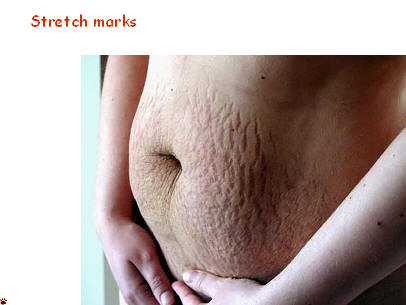
Stretch Marks


Stretch Marks are a form of scarring which occurs as a result of rapid stretching of the skin. They initially appear as red or purple lines, and then eventually fade to a light pink or white hue. The affected area is usually very soft to the touch.

While stretch marks can appear anywhere on the body, they usually appear in locations where the body stores more fat. Common places therefore include the stomach area, breasts, arms and armpits, thighs, hips, and buttocks. In most cases, stretch marks do not pose any health risk and are mainly an annoyance.

Stretch marks are caused by rapid stretching and tearing of the skin, usually as a result of rapid growth. Common reasons include:
Puberty
Pregnancy
Rapid weight gain or obesity
Fast muscle growth due to exercise.

While the scarring is permanent, a stretch mark can diminish slightly over time. Some home remedies can also be used to reduce the visual appearance of affected skin areas.

Home Remedies and Natural Cures for Stretch Marks Treatment

While it is not known why, many people have found that massaging cocoa butter into skin areas affected by stretch marks can help reduce the appearance of the scars. This works particularly well for individuals with darker skin tones. A suggested remedy is to massage cocoa butter over the stretch marks once a day. The stretch marks should begin to appear lighter in about a month.

Researchers speculate that the massaging of scarred areas helps stimulate blood flow and distributes collagen evenly in the affected areas. Collagen is a protein responsible for skin strength and elasticity.


Vitamin E is an antioxidant that helps reduce scar tissue on both the inside and the outside of your body. Therefore, a simple home remedy is to massage Vitamin E oil onto the stretch marks each day after showering. Many women have found this treatment to work well on stretch marks after a pregnancy, although results vary significantly.

Monday, June 23, 2008

Homeopathic Remedies for Pregnancy and Delivery


Pregnancy is an absorbing and interesting time for most women, and also involves a lot of stress. Many emotional, hormonal, and physical changes take place as the baby grows and the woman prepares for motherhood. Homeopathic remedies can help a woman’s body deal with various stresses, and help to maintain its balance as the pregnancy proceeds. Care and guidance from a competent, sympathetic physician or midwife are important during pregnancy—both for general support and to watch for complications.

Arnica: This remedy is often indicated for relief of soreness that comes from physical exertion and muscle strain. It is also useful for soreness after labor and delivery, and for hemorrhoids that follow childbirth.

Calcarea phosphorica: This remedy can help to strengthen a woman who tends toward easy tiredness, poor digestion, cold hands and feet, and poor absorption of nutrients. Some women who need this remedy find only “junk food” appealing during pregnancy, or have cravings for smoked and salty food. A history of easy tooth decay and aching bones and joints can also suggest a need for this remedy. A person who needs Calc phos is often irritable because of tiredness, and may long for travel or a change of circumstances.

Caulophyllum: This remedy may be helpful to women with weak muscle tone in the uterus. A history of irregular periods, slow and difficult labor with previous deliveries, or weakness of the cervix may bring this remedy to mind. The woman may feel erratic pains like sticking needles, or episodes of contracting pain. She typically feels nervous, shaky, and trembling (sometimes irritable, as well).

Carbo vegetabilis: This remedy can be helpful to a woman who feels weak and faint during pregnancy, with poor circulation, a general feeling of coldness, and a craving for fresh or moving air. She may also have frequent digestive upsets with burning pain and a tendency to belch. A woman who is deeply tired from overwork, many pregnancies close together, or a previous illness may regain some strength with Carbo vegetabilis.

Cimicifuga (also called Actaea racemosa): This remedy can be helpful to women who are nervous and talkative, with a tendency to feel fearful and gloomy during pregnancy. They may become overagitated and fear a miscarriage — sometimes having pains that feel like labor pains too early, or pains that shoot from hip to hip and down the thighs.

Ferrum metallicum: A woman who has a sturdy build, but looks very pale and weary—flushing red from any exertion or emotion—may respond to this remedy. Ferrum is often helpful in correcting anemic tendencies.

Ferrum phosphoricum: This remedy can be helpful for nervous, sensitive women who often feel weak or tired, with easy flushing of the face and a tendency toward anemia. A woman who needs this remedy often has a slender build and may develop frequent neck and shoulder stiffness.

Nux vomica: This remedy may be useful for indigestion, heartburn, stomach pain, and constipation during pregnancy. A woman needs this remedy usually is impatient, irritable, and chilly.

Pulsatilla: This remedy is often helpful at times of strong hormonal changes, especially to women who are moody and emotional, and want a lot of affection and attention. They often crave desserts or butter and may overeat, which can lead to indigestion and nausea, or excessive weight-gain. Pregnant women who need this remedy feel uncomfortable in hot weather and in stuffy rooms, improving from gentle exercise in open air.

Sepia: Women who are tired, dragged out, and irritable during pregnancy (feeling overburdened by demands of family members, or with little enthusiasm for the pregnancy) may benefit from this remedy. Poor circulation, nausea, constipation, a tendency toward accidental urine loss, and a feeling of sagging or weakness in the pelvic floor, and an energy-boost from exercise are other indications for Sepia.


Homeopathy Dosage Directions
Select the remedy that most closely matches the symptoms. In conditions where self-treatment is appropriate, unless otherwise directed by a physician, a lower potency (6X, 6C, 12X, 12C, 30X, or 30C) should be used. In addition, instructions for use are usually printed on the label.

Many homeopathic physicians suggest that remedies be used as follows: Take one dose and wait for a response. If improvement is seen, continue to wait and let the remedy work. If improvement lags significantly or has clearly stopped, another dose may be taken. The frequency of dosage varies with the condition and the individual. Sometimes a dose may be required several times an hour; other times a dose may be indicated several times a day; and in some situations, one dose per day (or less) can be sufficient.

If no response is seen within a reasonable amount of time, select a different remedy.


P.S.The information presented in Healthnotes is for informational purposes only. It is based on scientific studies (human, animal, or in vitro), clinical experience, or traditional usage as cited in each article. The results reported may not necessarily occur in all individuals. For many of the conditions discussed, treatment with prescription or over the counter medication is also available. Consult your doctor, practitioner, and/or pharmacist for any health problem and before using any supplements or before making any changes in prescribed medications.

Monday, June 16, 2008

Acupuncture Boosts IVF chances


“Acupuncture can increase the chances of getting pregnant for women undergoing fertility treatment by 65%,” according to The Guardian’s news pages.

The Times, The Daily Telegraph and BBC News covered the story and quoted Edward Ernst, a professor of complementary medicine, who cautioned that the effect might be due to a placebo effect caused by the women expecting acupuncture to work. He said that the expectation might cause them to relax which would improve pregnancy rates.

The study behind this story is a systematic review which combined the results of “high quality” studies on acupuncture, rates of pregnancy and live birth in women undergoing in vitro fertilisation (IVF). Although the methods used by this study are robust, some possible biases cannot be ruled out. Studies that have negative results are less likely to be published and may therefore not have been included.

When interpreting the 65% increase in pregnancy rates, it should be remembered that the differences in pregnancy rates were quite small. The results actually mean that in order to achieve one additional successful pregnancy, 10 women would need to be treated with acupuncture. The cost associated with lack of effect for the other nine women is something to be considered by individuals and health care providers.

Finally, the study found that the additional benefit of acupuncture depended on how successful IVF was overall. Where pregnancy rates were high, acupuncture had little benefit.

Where did the story come from?

Dr Eric Manheimer, Grant Zhang, Laurence Udoff and colleagues from the University of Maryland School of Medicine, Georgetown University School of Medicine, Washington and the University of Amsterdam, Holland carried out the research.

Funding was provided by the National Centre for Complimentary and Alternative Medicine of the US National Institutes of Health. The study was published in the peer-reviewed: British Medical Journal.

What kind of scientific study was this?

The study was a systematic review of randomised controlled trials that compared needle acupuncture given within one day of women receiving IVF with sham (fake) treatment or no treatment at all. The researchers searched for published literature in databases and conference proceedings for studies that compared acupuncture given within one day of IVF treatment versus sham acupuncture (or no treatment). They assessed the quality of 108 potentially relevant studies they found, and of these, included seven trials in their analysis.

Only studies in which pregnancy had been confirmed (either by presence of gestational sac or heartbeat on ultrasound), ongoing pregnancy beyond 12 weeks gestation (confirmed through ultrasound), or a live birth, were included. The researchers also only included studies in which acupuncture needles were inserted into traditional meridian points (groups of points thought to have an effect upon a particular body part).

The researchers used meta-analysis (a statistical technique) to pool the studies. They were particularly interested in the difference in rates of pregnancy between women who received acupuncture and those who did not.

What were the results of the study?

The seven studies that the researchers included in their analysis were all randomised controlled trials. In six of the studies, an acupuncture session was given just before the fertilised embryo was implanted back into the mother and another straight after. One trial involved acupuncture only after implantation. Two studies gave a third session during different phases of the process.

The authors reported that IVF with acupuncture increased the odds of pregnancy by 65% (according to early evidence on ultrasound), increased the odds of ongoing pregnancy by 87% (according to ultrasound evidence of pregnancy at 12 weeks) and increased the odds of a live birth by 91% compared with IVF on its own.

When the researchers only looked at the three studies that showed similar rates of pregnancy to women in the UK, they found that acupuncture did not increase rates of pregnancy with IVF.

What interpretations did the researchers draw from these results?

The researchers conclude that their results suggest that acupuncture given with embryo transfer, improves rates of pregnancy and live birth in women who are undergoing in vitro fertilisation.

What does the NHS Knowledge Service make of this study?

- In four of the seven studies that were included, the women knew which treatment they were receiving (while in the other three the comparison was sham acupuncture). The researchers say that the placebo effect (i.e. where believing in the effect of the treatment affects the outcome whether or not treatment is received) is unlikely to have had any effect in this study because the “outcomes are entirely objective (i.e. pregnancy and births)”. However, as mentioned in some newspapers, other researchers have said that it is possible that if women expect the treatment to be helpful then they may be more relaxed and this in turn could affect pregnancy rates.

- The researchers say that their findings are significant and clinically relevant, though they are “somewhat preliminary”. They conclude by saying that the effectiveness of acupuncture depends on the previous rate of pregnancy in the population. They call for further research to investigate the relationship between the previous (baseline) rate of pregnancy and the effect of acupuncture. When they limited their analysis to studies that had the highest baseline rates of pregnancy, there was no significant effect of acupuncture on pregnancy success. The fact that the baseline rates of pregnancy varied across the studies is a weakness of the review.

- The reviewers also say that publication bias may have affected their results, despite their best efforts to ensure this was not the case. They cannot rule out that there were small studies with negative results that have not been published and therefore not included.

- The use of “odds ratios” to reflect the comparison is questionable. The authors themselves say that the odds ratio “significantly over-estimates the rate ratio” because the outcome of pregnancy is relatively frequent. A better reflection of the absolute benefit is to consider that these results mean that 10 women will need to be treated with acupuncture for there to be an extra successful pregnancy. In the other nine women, there would be no additional benefit. It is also worth noting that confirmed pregnancy rates were not very different between acupuncture and non-acupuncture groups in real terms (32% v. 27%). Presenting the results in these terms gives them a little more context.

The results of this review suggest that acupuncture has a positive effect of pregnancy rates when given with IVF. An interpretation of the 65% benefit quoted by the papers must be considered in light of the fact that they represent relatively small absolute benefits considering that the rates of pregnancy in the non-acupuncture groups were high.

Links to the headlines

Acupuncture after IVF ‘could boost pregnancy’. The Daily Telegraph, February 08 2008
Acupuncture during IVF boosts a woman’s chance of conceiving by 65 per cent. Daily Mail, February 08 2008
Acupuncture ‘boosts IVF chances’. BBC News, February 08 2008

Links to the science

Effects of acupuncture on rates of pregnancy and live birth among women undergoing in vitro fertilisation: systematic review and meta-analysis.
Manheimer E, Zhang G, Udoff L, et al.
BMJ 2008; Feb 7

This news comes from NHS Choices